Designy Digest / 001
Why isn’t Ai creating order in our software, should product designers adopt Ai design tools, and are you replacing Ai help for strategy?


There’s a lot of chatter around the product design craft over Ai. That is a lowercase i. Remember, the intelligence is artificial. You still hold all the real intelligence cards.
Why isn’t Ai creating order in our software?
 Marc Speed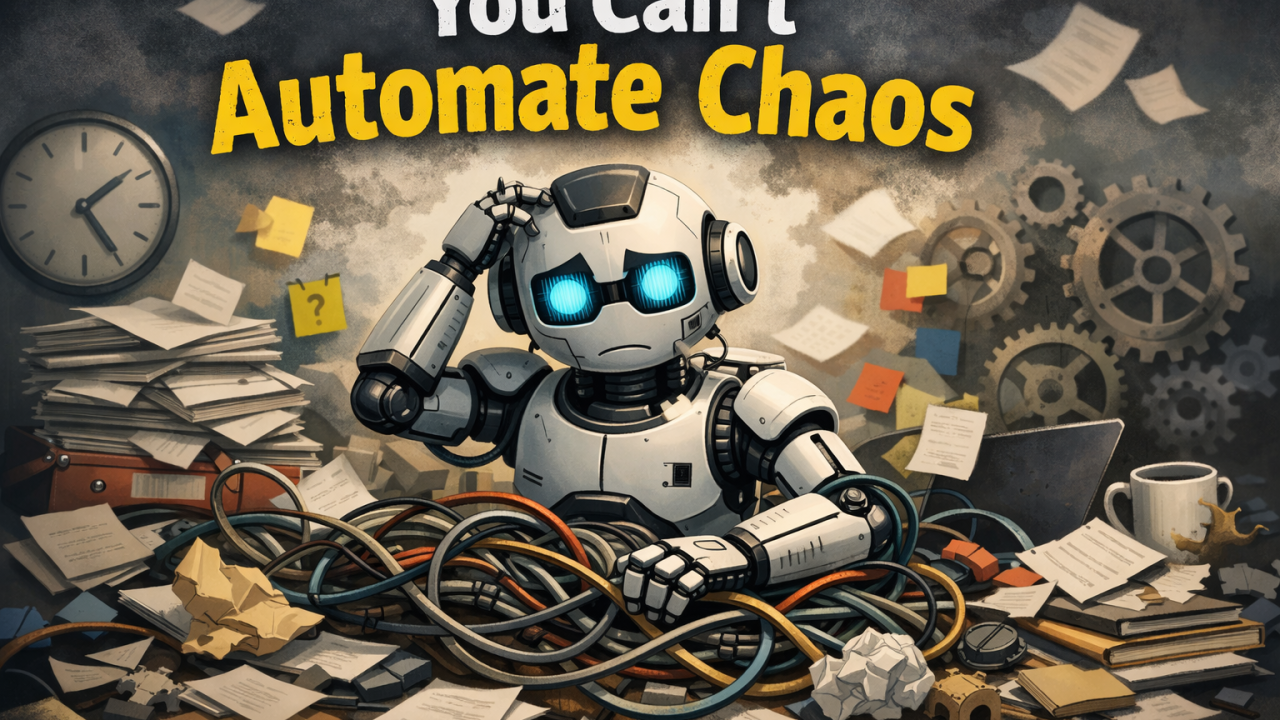
I worked with Marc for a number of years a while back. He’s a very sharp, process-minded consultant. He wrote a short piece on why Ai is not automatically the silver bullet of software solutions:
They’re not starting with broken technology. They’re starting with broken processes...When that happens, AI doesn’t fix the problem. It scales it.
He proposes a number of questions to ask before starting an Ai pilot. One was spot-on for all designers because it’s also the heart of the Designy Framework:
Do we know what “good” looks like for outcomes?
Exactly—outcomes are going to happen whether you define them or not. So, why not look ahead and know what the good side of the outcome you want?
Even so, one of the tenants of every product designer’s tool belt should be understanding the intended outcome for the app/feature/element they’re designing. This is what I roll up and call Purpose. One of the biggest challenges product designers tell me is the requirements are vague. It’s about the same as guessing what the solution should be and hoping it hits the mark.
You can’t guarantee an outcome, but you’ll never design a solution anywhere close without clearly defining its purpose. The irony is, once you define the purpose, you may discover the solution isn’t anything you could have prescriptively determined ahead of time. That may end up being not to add an Ai solution to your problem.
Should product designers adopt Ai design tools?
 James Marshall
It’s what’s going around—the “Designers adopt Ai or be left behind” mantra. The tool will out design you in a flash, and so on. That being said, Ai is not all rubbish, but what should designers adopt or not adopt?
James writes:
The reality is, no one truly understands how this plays out. Anyone who tells you exactly how the future unfolds is hypothesizing at best...What you can control is how your team learns new tools and integrates them into workflows.
I commented that was: “Absolutely true. Even so, the design process way of thinking has been constant, regardless of the current tools of the era. Learning a tool will make you obsolete eventually. However, dedicating time and effort into being taught how to approach design will give a designer stability no matter how tools change.”
Not sure how that landed, but to clarify—the approach for making design decisions has not changed. The strongest design decisions are the ones where the purpose of what we’re building has been defined. You can what I’ve written on purpose here on Designy.
Are you replacing Ai help for strategy?
 Craig Moser
I worked with Craig when he was the VP of Design at IBM, and he wrote a spot-on article here. It’s a slippery slope of using Ai casually for idea generation, but it can quickly become the go-to for production-level solutions.
Why is this an issue? Ai is skipping the fundamental portion of the design process itself.
Craig says:
The rise of AI in product development was supposed to free designers from boring execution work, letting them focus on strategy and vision. But too often decisions are happening earlier, with less design input, and the work that remains often feels like cleanup rather than creative direction.
Absolutely. Unfortunately, the “boring execution work” in the design process is actually part of the beauty of problem solving visually. Designers are the physical “interface” between the business stakeholders, the engineers, and the users, and it’s a dynamic relationship.
The design process is the only thing that makes all those ideas visible to everyone. It takes time, energy, and discernment to deliver value to each of those people at once.
It is a teachable skill, though, so there is still hope!
If you have a moment, check out the latest from The Daily Sprint podcast!