Designy Digest / 005
Design process and genAI, a missed design leadership opportunity, and how to use the design power of time


The real conversation underlying AI and the product designer’s future
The flurry of genAI design tools is unstoppable these days. Not only are there new tools practically daily, but the existing tools are updating faster than you an regen a prompt.
The conversation happening about design being dead, product designer roles being the first to die to AI, and design jobs being taken over by designers who only use AI has reached a fever pitch. Of course, there’s some truth, but it’s a lot of noise.
The reason is because the underlying issue is not about AI at all, but rather many designers unaware they’re operating without a solid design process foundation.
I wrote this on X:
Good POV.
— Cameron Moll (@cameronmoll) April 27, 2026
For what it’s worth, I was glad to get Cameron Moll’s support on it, but the greater boost is hearing confirmation we need to think deeper about how we employ the design process as designers.
There’s so much noise out there pushing generative AI for product design. Where it makes sense to automate repetitive task, it should be explored. However, AI is no substitute for thinking.
Thinking will stand the test of time. No matter how advanced our tools become, your knowledge of the underlying thought process will always be the long game advantage. Designing is thinking, so double down on that skill and invest, and I can help.
A missed opportunity for design leadership
I saw this post on LinkedIn, and it demonstrates a few things:
- Stakeholders typically don’t know how to ask for the outcomes they’re really after
- Designers who take a “my way or the highway” approach miss an opportunity to demonstrate the value of design
Here’s the post:
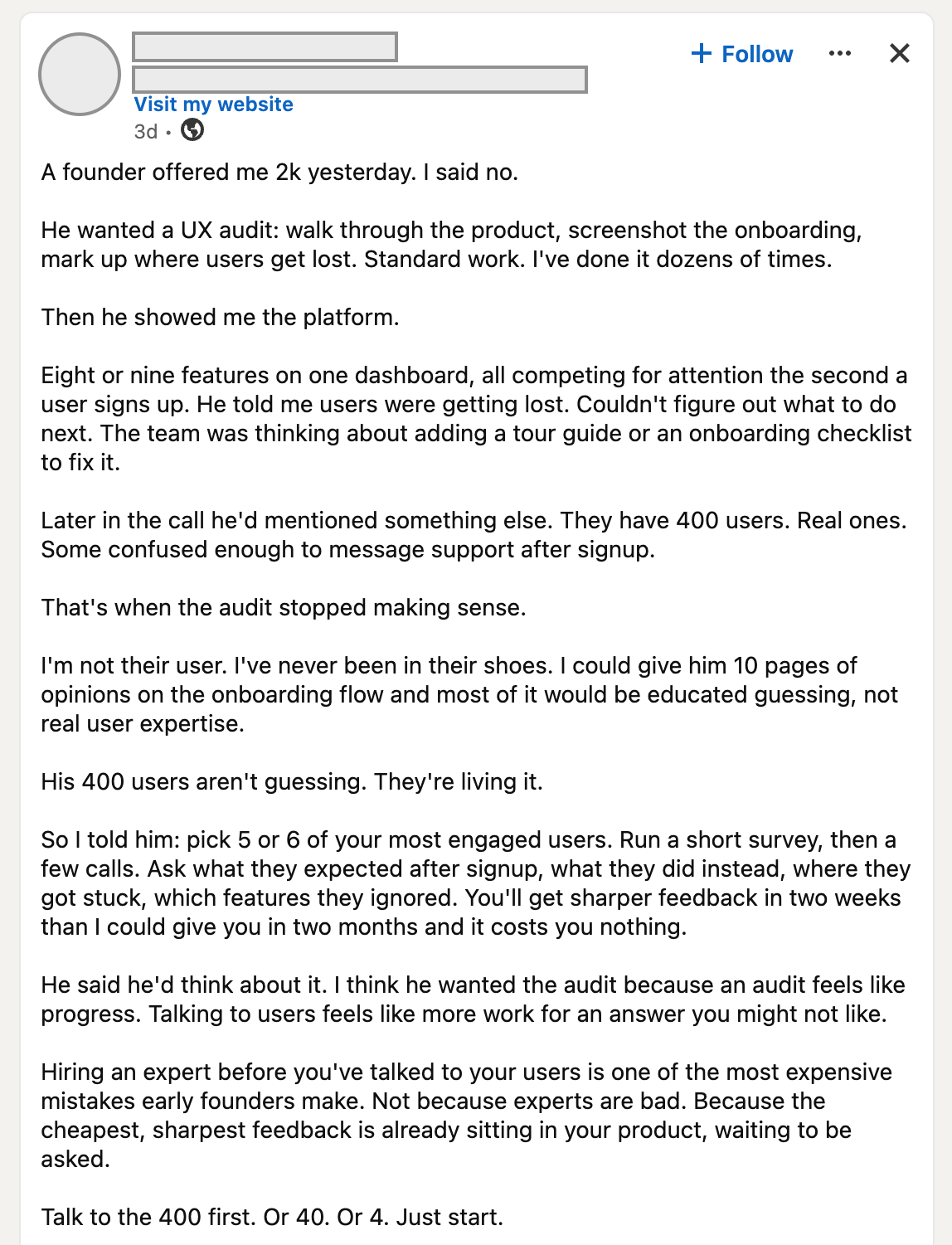
The author is 100% correct in his proposal, but he just walked away from a partnership and left the stakeholder in the dust.
Stakeholders respond in a prescriptive way because they don't know the product design landscape, but they're looking for someone to show them. Designers can lead stakeholders through a better way.
It was great advice (in the 9th paragraph), but the author put the burden on the stakeholder. The problem is this stakeholder either doesn't have the time or the insight to follow through, yet he has budget looking for answer from an expert.
This designer didn’t see the opportunity to become a design leader by simply redirecting the efforts to a more effective approach.
Imagine revising the focus of this $2K prescriptive request into a project that would get the founder great research, expert design analysis of the next steps as well as build a lasting design partnership.
You don’t have to be a freelance designer to make these sorts of proposals. Stakeholders will approach you with all sorts of prescriptive requests, but you can turn them around into purpose-driven action.
Check out How to Make Vague Requirements Clear at Designy Academy.
Why the rush to design?
With AI generating everything to “save you time” and Designers missing opportunities to lead, it seems we’d all benefit from a bit of a slow down.
This idea that we’re missing out, losing the bid, or simply falling behind is a self-made pressure. Sure, there are real deadline. Yes, we want to be responsible designers and deliver our best. Even so, we can actually design better if we consider time as our greatest investment.
There are three actions you can take to leverage the design power of time:
- Action #1: Take the time for discovery
- Action #2: Use time away from your design to improve your work
- Action #3: Demonstrate the value of time to stakeholders
Check out the mini deep dive in Episode 16 of The Daily Sprint podcast.
 Darrell Estabrook
Thanks
Have a great day designing!
—Darrell