What does it mean UX is transforming into AX?
User Experience (UX) designers will need to become Agentic Experience (AX) designers, but it that the inevitable reality?

As the inevitable decline of design looms before us, it’s worth taking a moment to listen to some of the drumbeat happening. This is from John Maeda on X:
AX: Design saved the day back in 2010. But this next wave of Agentic Experiences (AX) will prove to be quite different compared to what gets practiced today.
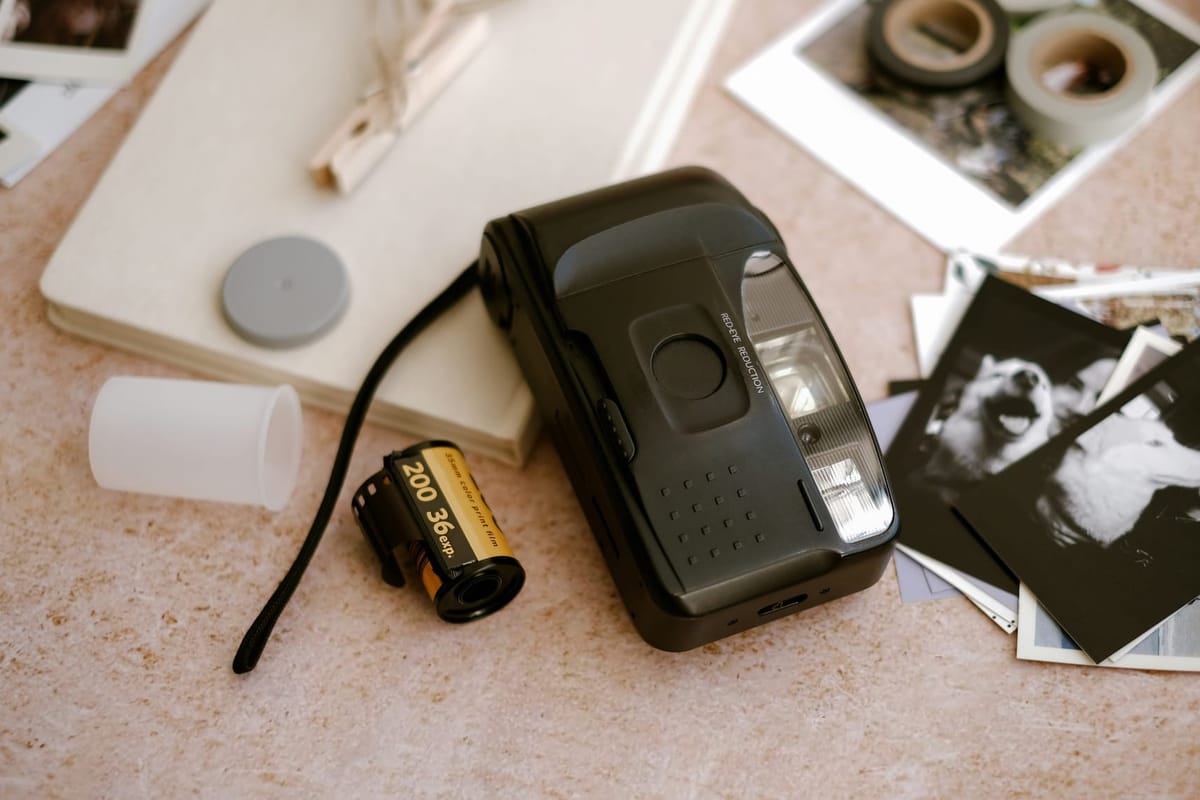
...I was of the age that could remember a company called Kodak that missed the shift to digital photography from pure chemistry. At the time, it felt unimaginable that film negatives would go away...
Disruption is an uncomfortable thing to experience. It generally feels desirable to wish the ongoing change to just disappear. Unfortunately that’s not a good strategy to bet on if you aren’t correct. But if you understand how we got here, and you know how to speak machine, then I believe you will have the tools with which to take action…
Post from John Maeda on X, March 30, 2026
There seems to be a lot of effort in providing a way to explain where design is headed in the world of AI.
Maeda compares the shift of Chemical Film → Digital Film with the shift of UX → AX. There have been other cases thrown about such as AI is a technological leap going from Abacus → Calculator. These illustrations fall flat by saying UX will simply be a more advanced version of what it’s been.
These analogies don’t capture the true jump in category regarding the nature of AI nor what effect it’s having on human thinking
I, too, remember growing up in the ’80s when Kodak reigned. You would pick up a roll of film with the capacity for 24 photos. If you had the urge to splurge, you would get a roll with 36 photos. You guarded every shutter click, and took only the moments you deemed worthy to capture.
Then you either went to the drugstore or mailed in your roll of film to get them developed—hopefully within a week or so. When you received the packet of photos, it was a thrill to see “if they turned out” or not. Oops! That picture of Niagara Falls had my finger peeking into the lower part of the frame—oh well.
When digital cameras first came out, they were extremely poor resolution. A 640 x 240 image was magic, but we didn’t care because you could seemingly take unlimited images compared to film. Where’s the viewfinder? Oh, it’s a screen you have to hold in front of you. Can I print the out? Sure, on printer paper from your inkjet.
Very imperfect, but digital photography didn’t go away—it exploded.
Do you pick up a Kodak camera or your phone today?
Sure, digital photography was a technology shift, but here’s the key.
Photographers never stopped needing to know the principles of design for photography—composition, lens behavior, or the physics of aperture and exposure makes or breaks an image.
Digital film democratized the ability for anyone to "make photography.” It gave some people the opportunity to discover a talent for photography they never knew they had. It also created a subculture of “good enough,” yet poorly composed, photos (i.e. "Instagram").
One might say today’s phones are so advanced one doesn’t need to know the principles of design for photography. That’s true for the 80% of people who want to capture a moment in low light or extreme brightness, but it doesn’t account for composition and the ability to capture aesthetic.
If you want to see the difference, browse the collection of photos on Unsplash. I subscribe to Unsplash+ for this very reason. People with talent and understanding of photography produce superior material than I could take.
Whatever software design process baggage is tied up in the definition of the term "UX" the reality is there will always be a User Experience in software, and it will need to be designed.
AI is democratizing the ability for anyone to “make an app.” It’s giving some people the opportunity to discover a talent for software they never knew they had. It’s also creating a subculture of “good enough,” yet poorly designed, apps (i.e. practically every demo posted on LinkedIn).
One might say today’s generative AI models are so advanced, one doesn’t need to know the principles of design for apps, let alone code architecture. That’s true for the 80% of people who want to solve an off-the-cuff problem, but it doesn’t account for systems, scalability, or ultimately purpose.
Note: I’ve referring to AI as a generative tool for creativity, not as a feature within software. There’s potential for leveraging AI in an analytical nature or even within processes, but even then this is a very immature frontier with a lot of trust issues.
The current conversation is to push designers to give over their creative ability to generative AI and allow it to make design decisions. There are backdoor comforts offered that say, “Don't worry, you can edit it.” However, the reality is if the AI output is “good enough” why bother? A bit of extra tweaking is not going to change minds. Whether it's the right solution or trustworthy, that's another discussion.
And what that means is we won't create interfaces in the future—it’ll be generated. And the question becomes, “How do we judge quality taste?” So most of design work will be about the feedback loop, the evaluation loop, the critic loop. —John Maeda, Design in Tech Report SXSW 2026: UX to AX
The future designer is being painted as simply becoming the human-in-the-loop. If true, that’s thinking too narrowly. If this AI maturity continues in this assumed trajectory, no one will care to have a human in the loop. There comes a point where the AI is so abstracted away from the user, whatever they see is assumed to be correct. Perhaps this will never affect the running of nuclear facilities, but it’s certainly in scope for the majority of other technological interactions.
If true, the implications are staggering. AI is not merely a transformation of processes or a new version of an existing tool. It is a fundamental change to the way people approach communication, expression, art, and interacting with technology. This isn’t the next iPhone. This is a new force, and we have to decide where and how it fits into reality.
This goes beyond our jobs because it touches the fabric of life. You can read about My Why of life, what drives me, and why that purpose defines how I approach these topics.
Even so, I don’t see this assumed future being the reality of design.
Yes, there will be more AI-capable features for designers to use, but those tools may be agenic themselves. However, at the core of design, the designer will need to have control over the output. Otherwise, the AI should simply be trusted.
Designers’ tools may change, but designers who know how to turn ideas into something tangible will always be designing the experience. That’s valuable.
Be like the photographer and double-down on what it means to understand purpose, to translate that into something others can react, and facilitate a meaningful conversation around what to push and pull to affect the outcome. Become an expert at formal critique so you can give and get feedback.
We were made to create, not merely to generate.